The wedding news in 2026 is not just about color palettes or Instagram staging. Structural changes are affecting contracts, timelines, and budget allocations long before the scenography. We are witnessing profound changes in how couples negotiate with venues, manage climate uncertainties, and rethink the very format of the reception.
Climate Clauses in Venue Contracts
Venues located in Provence, Occitanie, and Catalonia now include specific clauses related to extreme weather events. Since the heatwaves and wildfires that occurred during the summers of 2022 and 2023, the contractual management of climate risk has become a significant negotiation point.
These clauses cover three distinct cases: the administrative closure of the site in case of fire risk, the obligation to move the reception indoors, and outright cancellation if authorities restrict gatherings. A couple signing a venue rental contract without checking these provisions is taking a real financial risk.
We recommend systematically asking the venue manager for a copy of the indoor backup plan with a specified capacity, and checking if the contract provides for a partial refund or rescheduling in case of cancellation due to climate force majeure. Following wedding news on Actu Mariage keeps you informed about these contractual developments that change each season.
Weekday Weddings: The Budgetary Trade-off Restructuring the Market
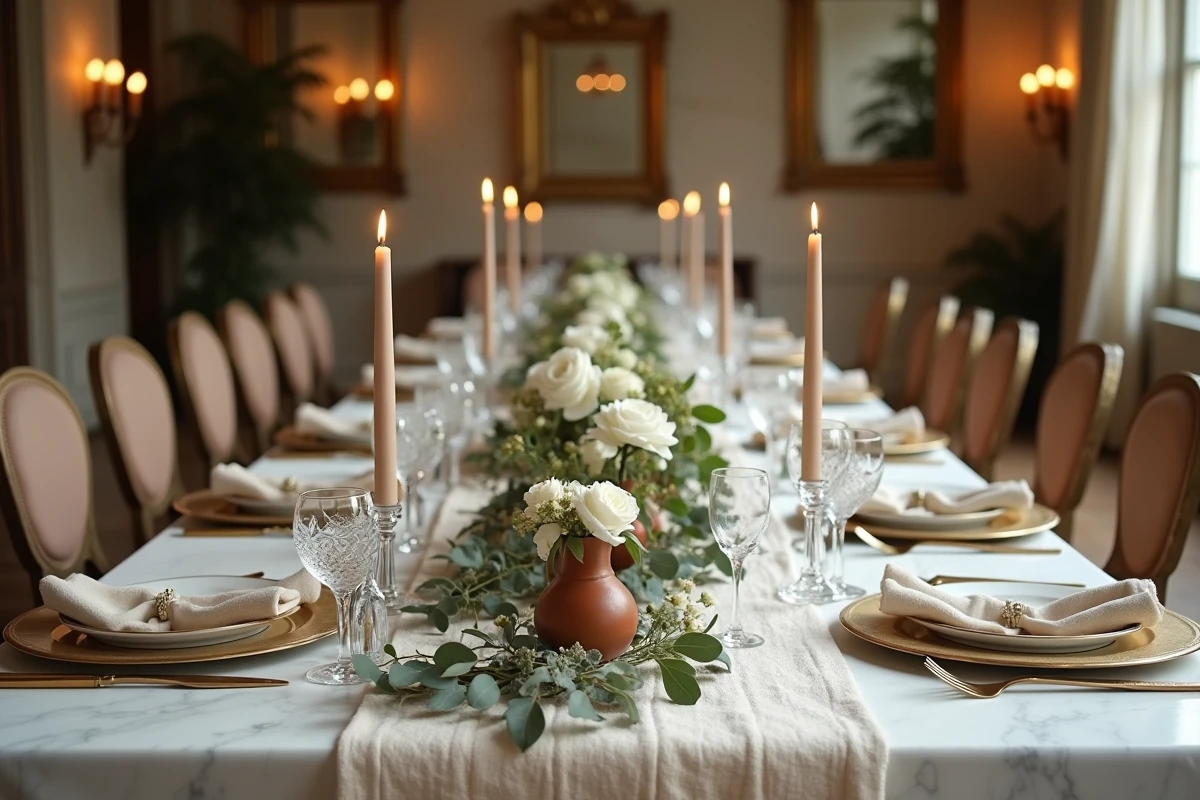
The increase in weddings held from Monday to Thursday represents one of the most significant logistical shifts in recent years. The “Wedding Observatory 2025” barometer published by Mariages.net in February 2025 confirms a significant increase in weekday bookings compared to pre-Covid times.
The mechanism is simple: venues, particularly networks like Châteauform’ or Gîtes de France affiliates, offer significantly lower rates midweek. Availability is also much better, opening access to sites that are usually fully booked two years in advance for a Saturday.
What Choosing the Day Actually Changes
The budgetary gain is not limited to the venue. Vendors (caterers, photographers, florists) often adjust their pricing grids based on the day of the week. Choosing a Thursday instead of a Saturday substantially reduces the overall cost of the reception, sometimes enough to reallocate the budget towards a higher quality caterer or a more ambitious scenography.
The trade-off concerns guest availability. Couples opting for this format generally reduce their guest list, which produces an interesting side effect: more intimate receptions, with a higher ratio of close guests.
Decoration Trends and Wedding Style: What Really Shapes Choices in 2026
Aesthetic trends this year are polarized between two directions that couples rarely combine: radical minimalism and heavily rococo or retro-inspired atmospheres. Chrome accents, architectural draping, and bold colors like cobalt are gradually replacing the pastels that dominated since the late 2010s.
- Draping and mirrors create volume effects in reception venues, particularly in converted barns and industrial buildings, where they compensate for the austerity of raw walls
- Cobalt and contrasting colors are replacing powdery tones, including on brides’ outfits, which are moving away from all-white
- “Unplugged” ceremonies are gaining ground, motivated by the desire to refocus attention on the moment rather than on capturing it by guests
- Mobile bars and moving catering formats are replacing the traditional seated banquet, allowing for free circulation and more spontaneous interactions
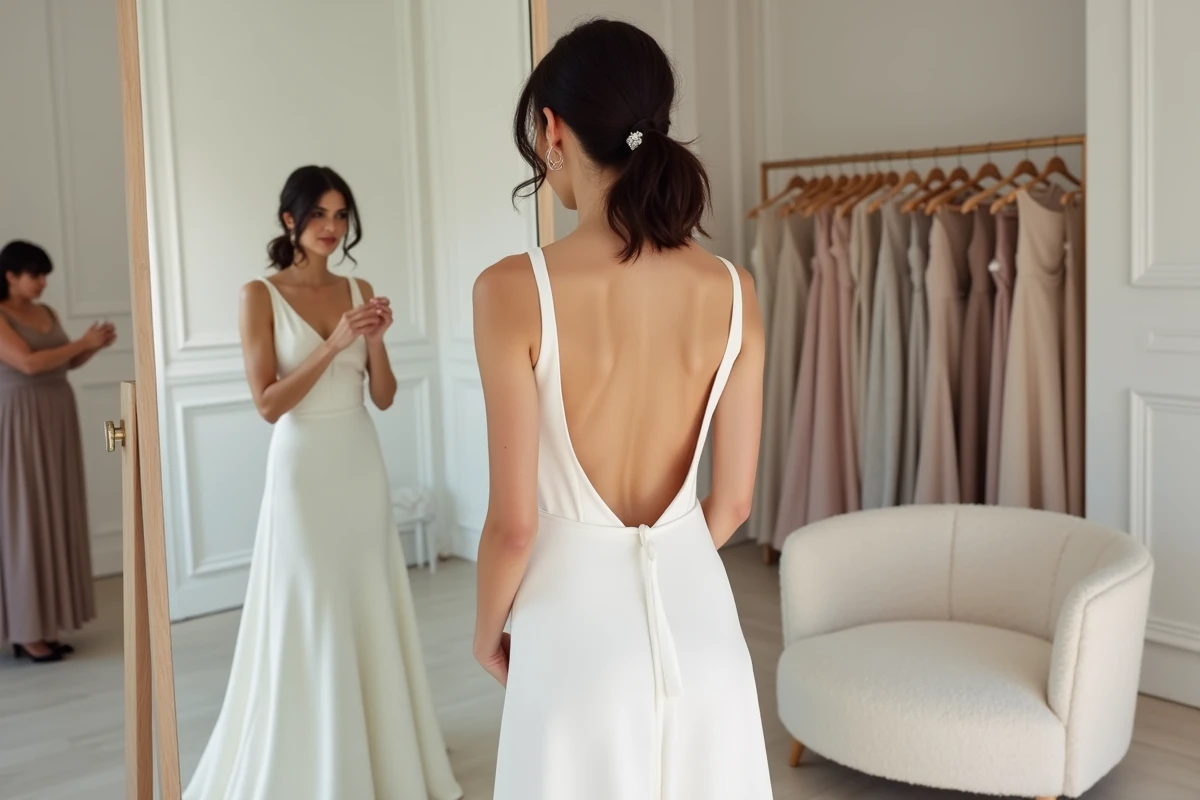
Wedding Dress and Groom’s Attire: Notable Evolutions
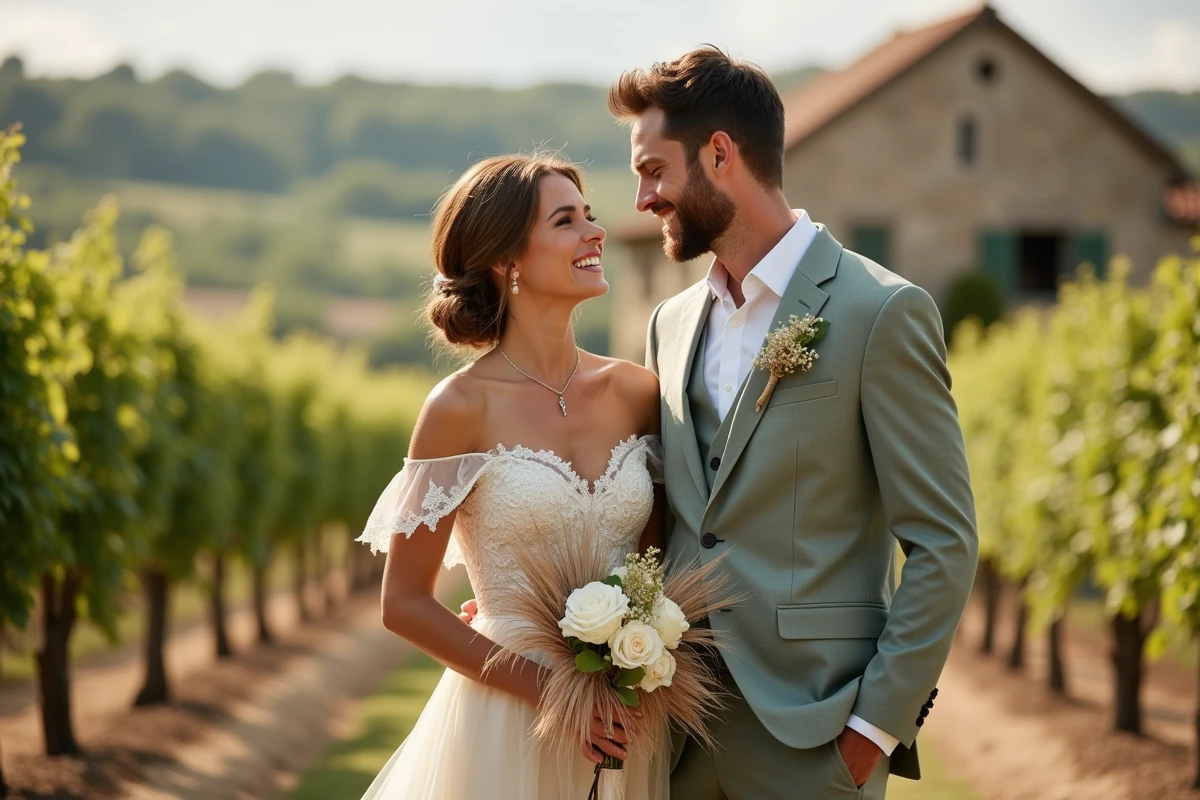
The traditional wedding dress is no longer the default choice. Jumpsuits, two-piece sets, and colored dresses are increasing in orders from designers. For grooms, structured suits are making way for more relaxed alternatives, especially for weekday or outdoor weddings.
However, the choice of attire remains the area where couples invest the most in terms of research and customization. The underlying trend is uniqueness: having a custom piece made or modifying an existing dress rather than buying a catalog model.
Green Weddings and Handmade Gifts: Beyond Marketing Discourse
The eco-responsible approach to weddings now goes beyond simply choosing reusable tableware. Handmade and organic guest gifts are becoming a marker of the couple’s positioning, with a preference for local productions and short supply chains.
We observe that providers offering labeled or traceable options (artisan soaps, local honey, regional flower seeds) are experiencing growing demand. This movement fits into a logic of coherence: a couple choosing a venue in nature or a locavore caterer extends this logic into the details of the reception.
The pitfall to avoid remains unintentional greenwashing. Ordering “made in France” seed packets wrapped in imported plastic, or candles labeled as artisanal but mass-produced, undermines the credibility of the approach. Checking the origin and manufacturing method of each item distributed to guests takes time, but it makes the difference between a genuinely committed wedding and a superficial display.
The wedding news in 2026 is therefore played out as much in the annexes of contracts and reservation calendars as in inspiration boards on Pinterest. The best-prepared couples are those who master these two dimensions, contractual logistics and aesthetics, without sacrificing one for the other.