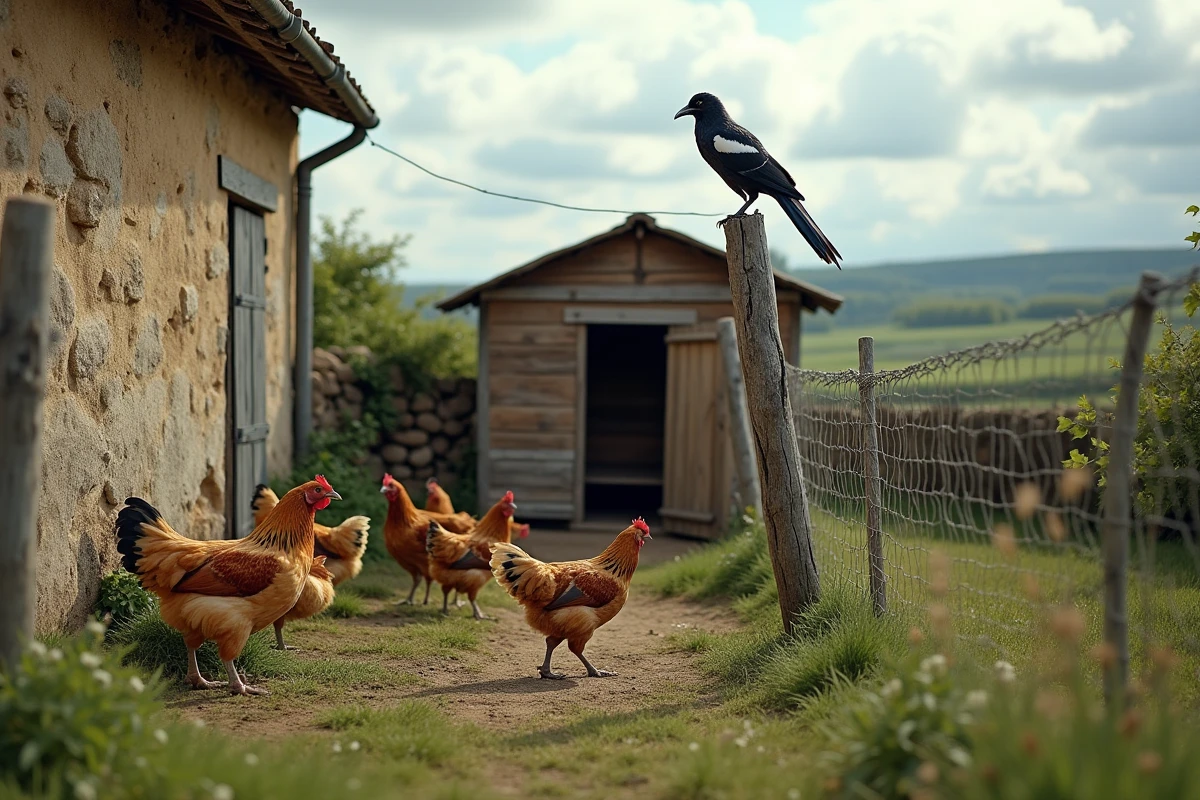
Magpies are among the most adaptable corvids. Their intelligence allows them to quickly bypass traditional repellents, making the protection of a chicken coop more challenging than with other wild birds. Which methods truly withstand their learning ability, and which lose their effectiveness in just a few days? Here are ten concrete techniques, compared according to their durability and mode of action.
1. Fine mesh anti-corvid netting
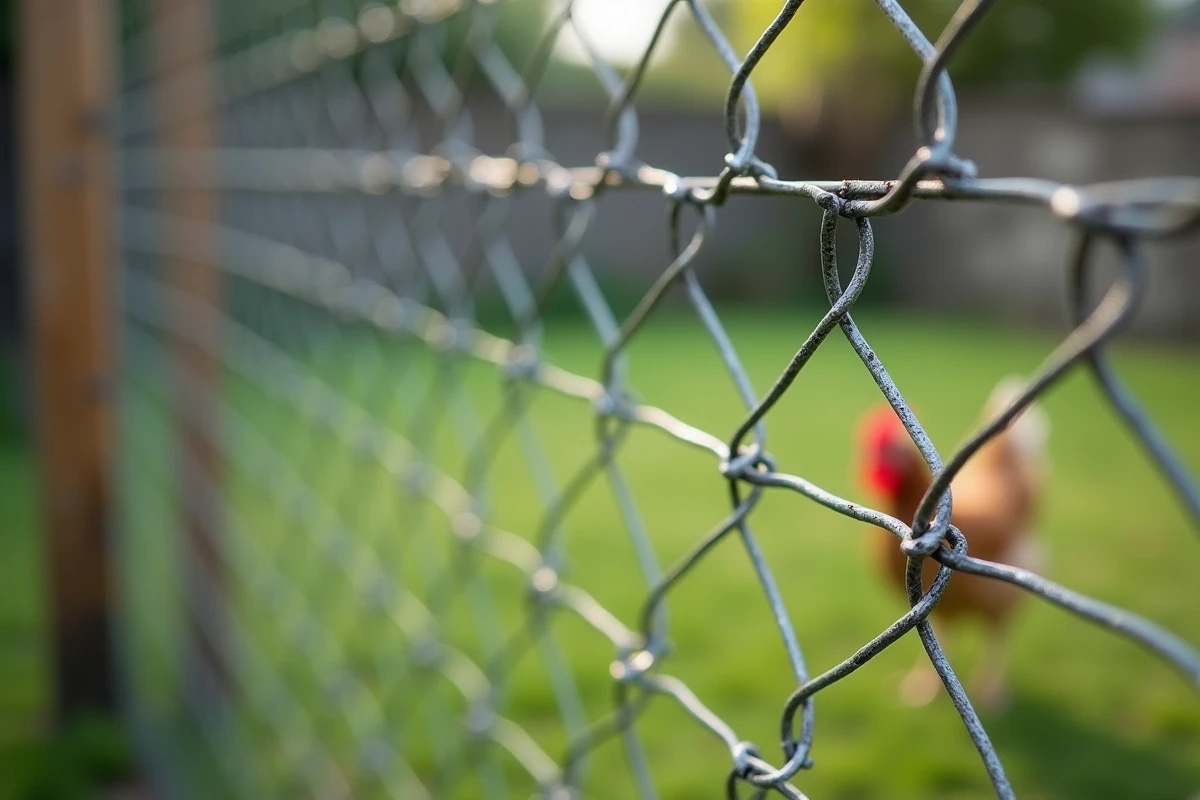
Standard mesh of 50×50 mm allows the beak of magpies to pass through, enabling them to reach eggs and chicks. Anti-corvid mesh with a size of 25×25 mm or less physically blocks this access. Several agricultural suppliers (Gamm vert, Point Vert, Innovagri) sell these nets specifically designed to counter corvids.
This approach relies on a permanent mechanical barrier, with no possibility of habituation. Feedback from amateur breeders on poultry forums confirms a near-disappearance of egg theft after installing fine mesh covering the entire aviary, including the roof.
Among the various tips to keep magpies away, fine mesh remains the one whose effectiveness does not decline over time.
2. Fully enclosed mobile chicken coop
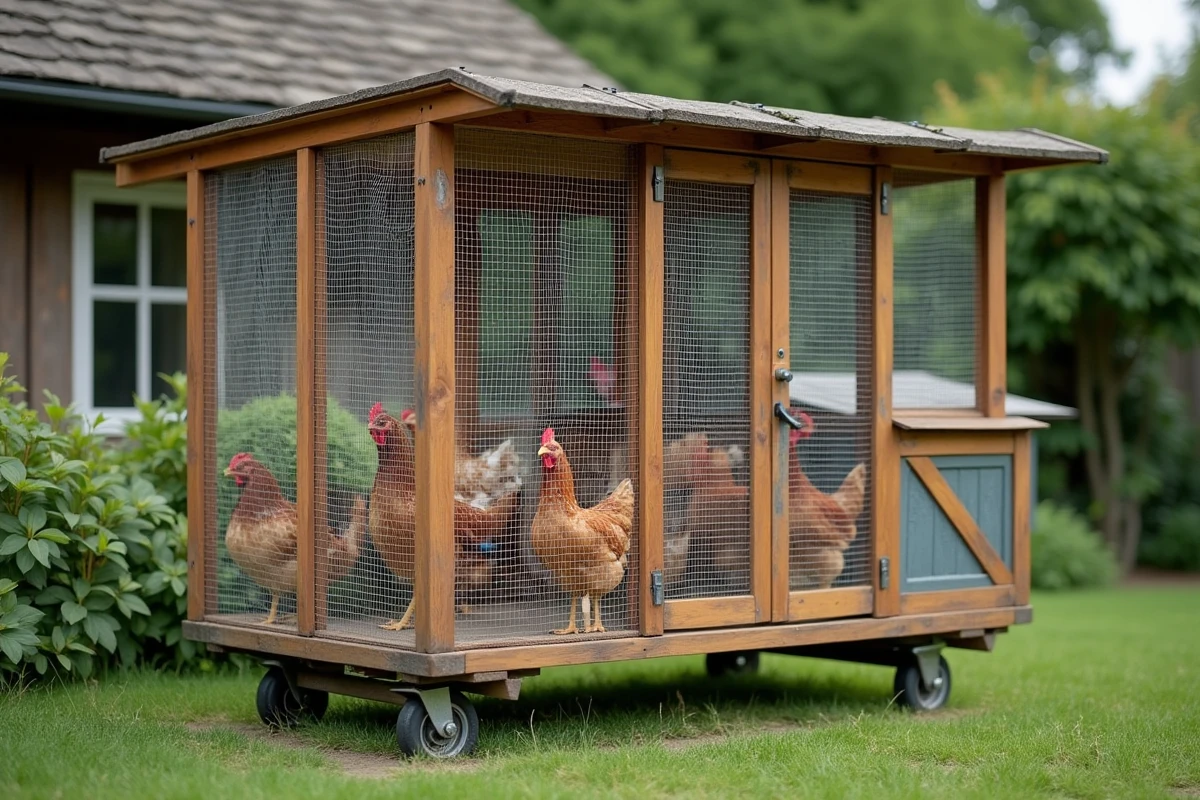
The so-called “chicken tractor” model combines a movable shelter with a fully enclosed aviary made of fine mesh. Testimonials from breeders between 2022 and 2025 indicate that this type of structure significantly reduces magpie attacks on eggs, especially in open areas (meadows, edges) where poorly netted fixed chicken coops are most vulnerable.
Regular movement also prevents magpies from memorizing a fixed access point. However, this system is mainly suitable for small farms, as the available space per chicken remains limited.
3. Systematic closure of nesting boxes
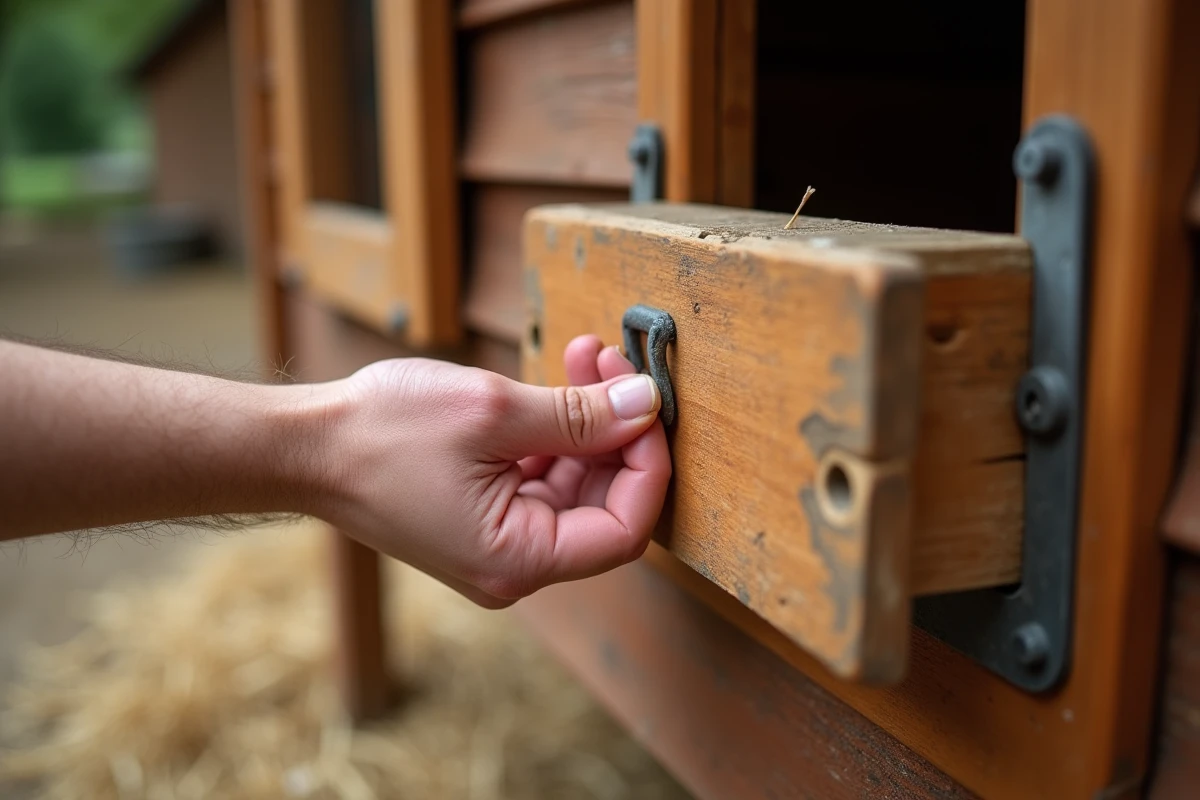
Magpies primarily target accessible eggs. An always-open nesting box is an invitation. Installing foldable shutters or flaps on each nesting box and opening them only during laying hours removes the main source of attraction.
This method requires no heavy investment. It demands consistency: an open nesting box forgotten just one morning is enough for the magpie to spot the resource and return.
4. Automatic chicken coop door
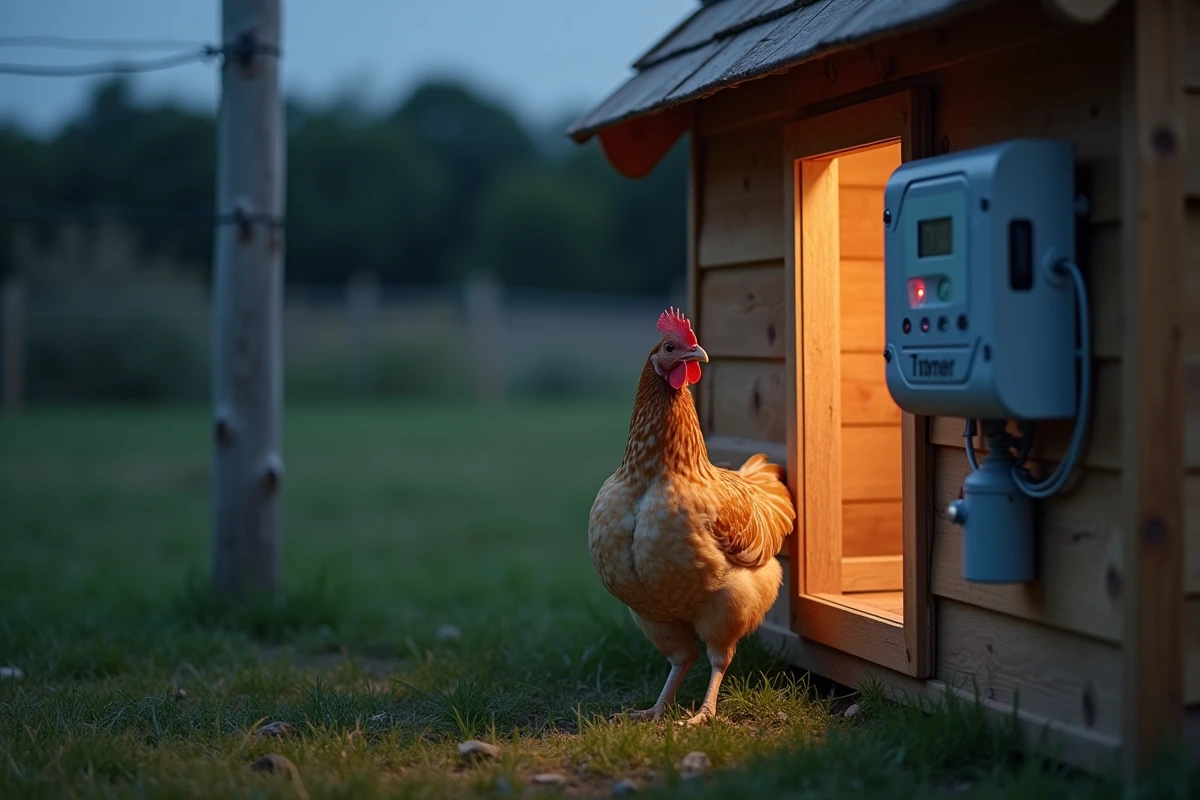
An automatic door closes and opens the chicken coop hatch according to a schedule or a twilight sensor. Magpies are active from dawn, often before the breeder gets up. The automatic door eliminates the morning vulnerability window during which the door remains open unattended.
The device also protects against nocturnal ground predators (weasels, foxes), making it a dual-purpose investment.
5. Bird netting on the roof of the enclosure
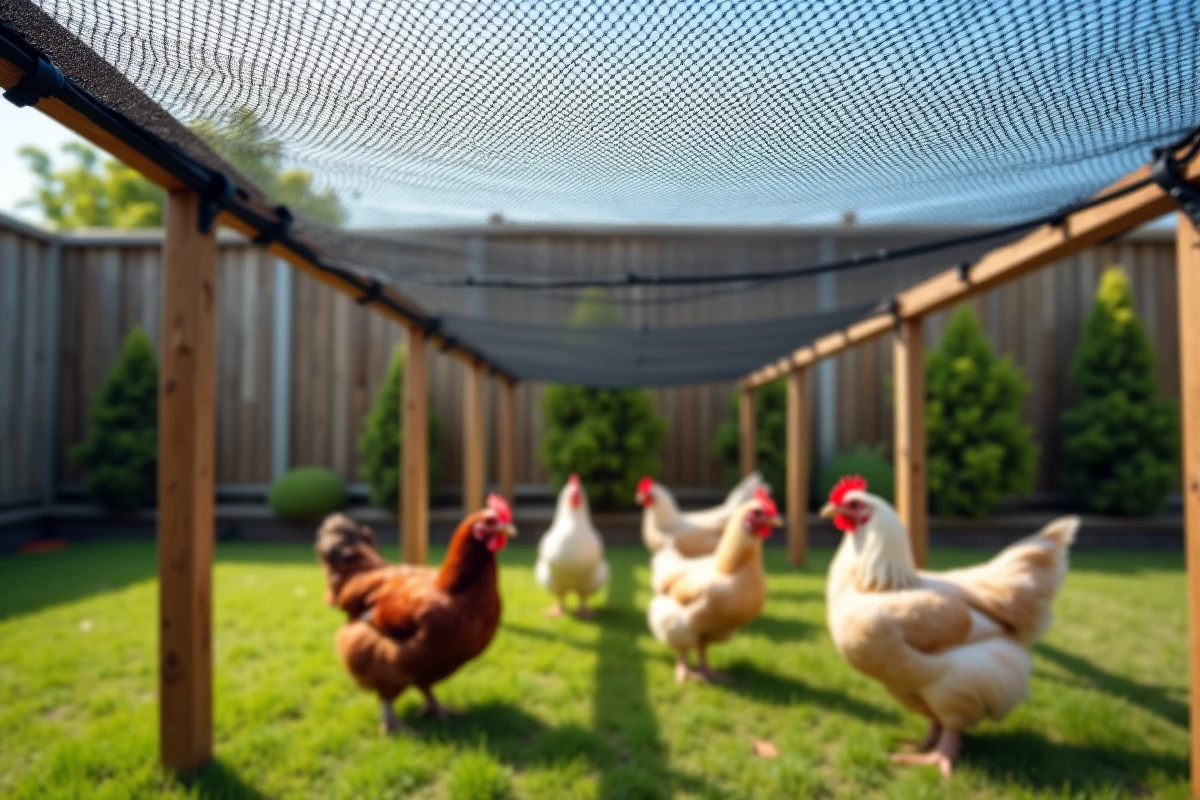
Covering the top of the enclosure with netting prevents magpies from entering from above. The magpie, unlike the weasel, does not try to dig under the mesh: it always attacks from the air. A net stretched at a good height, without pockets where a bird could perch, forms a deterrent barrier.
The net must be checked regularly. A tear or sagging creates an entry point that magpies can exploit within hours.
6. Airtight storage of grain
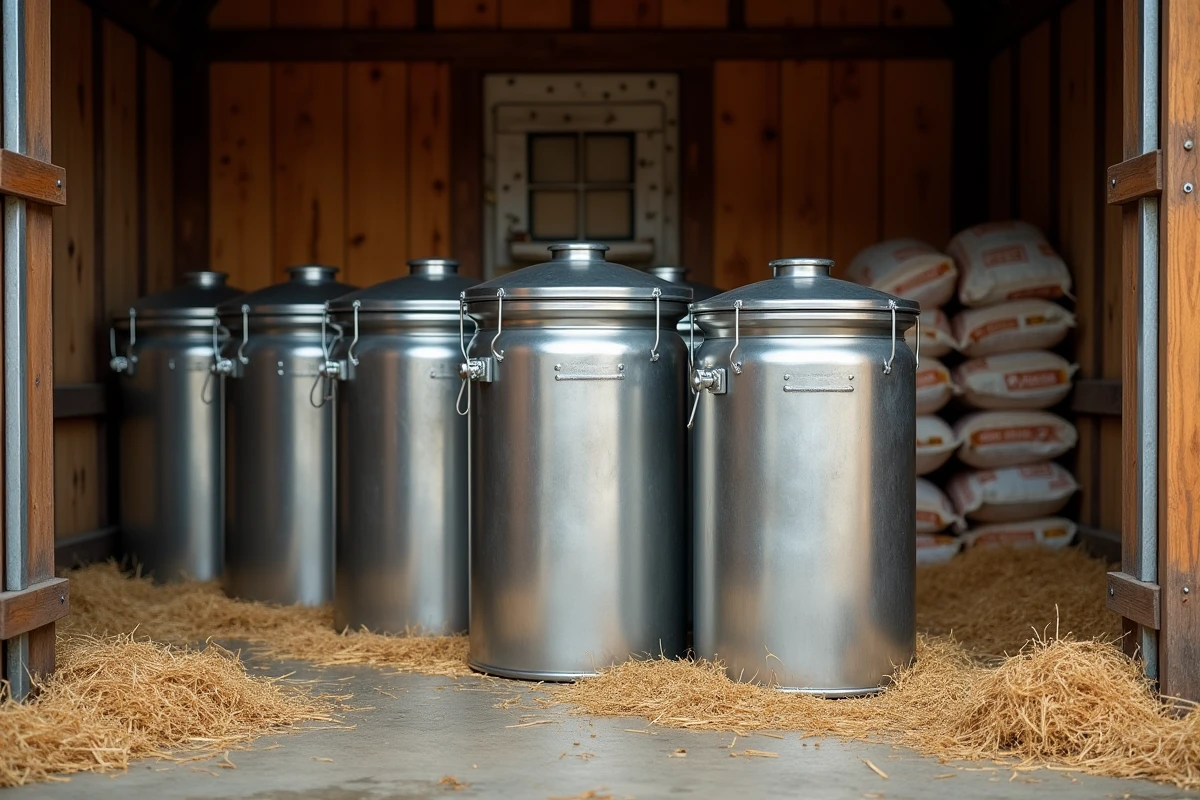
Grain left exposed attracts magpies far beyond the chicken coop. Storing food in airtight containers (metal or rigid plastic with a lockable lid) reduces the overall attractiveness of the area for corvids.
Additionally, food scraps on the ground should also be limited. Distributing grain in consumable amounts throughout the day, rather than as permanent free access, decreases the olfactory and visual signals that attract magpies from several hundred meters away.
7. Rotating visual scarecrow (raptor kite)
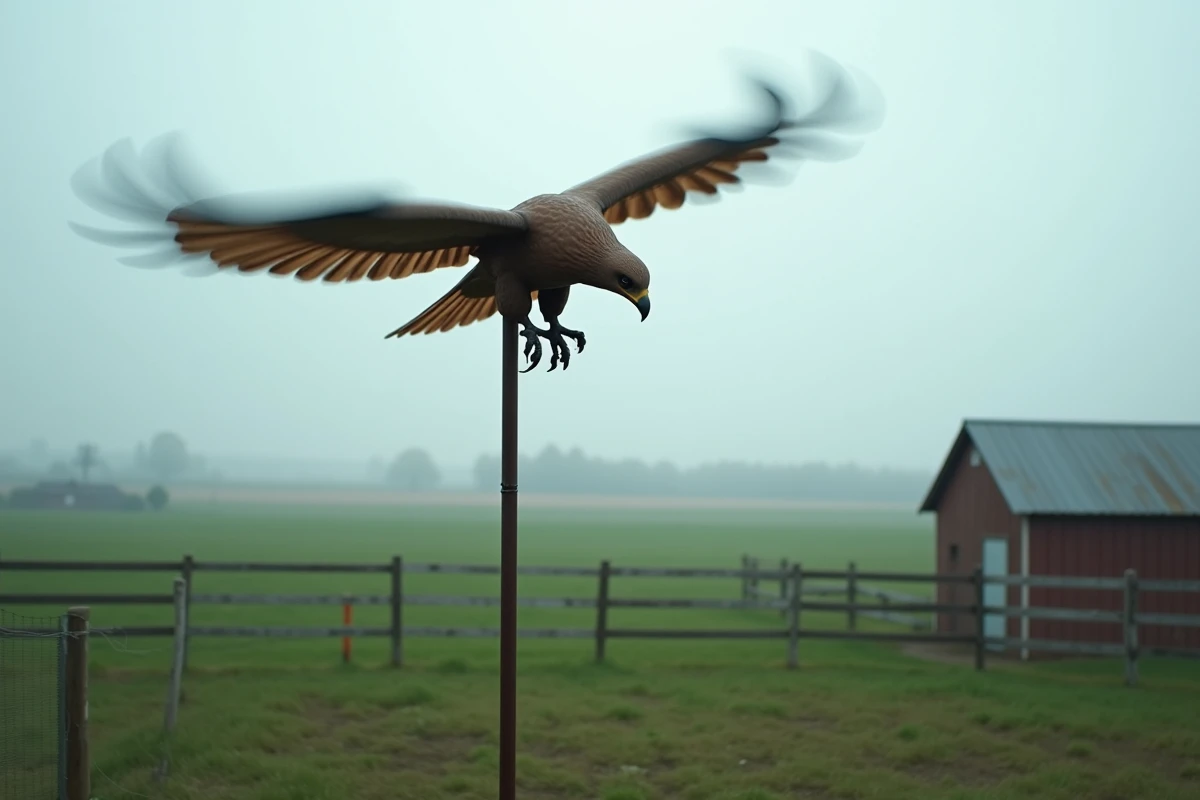
Kites mimicking the silhouette of a raptor exploit the flight reflex of magpies in the presence of aerial predators. Their random movement in the wind makes them more credible than a static scarecrow.
The limitation is known: magpies habituate to any fixed visual device within a few days. Regularly moving the kite and intermittently removing it prolongs its effect. Used alone, it is not sufficient, but combined with a physical barrier, it enhances the initial deterrence.
8. Sound scarecrow with distress calls
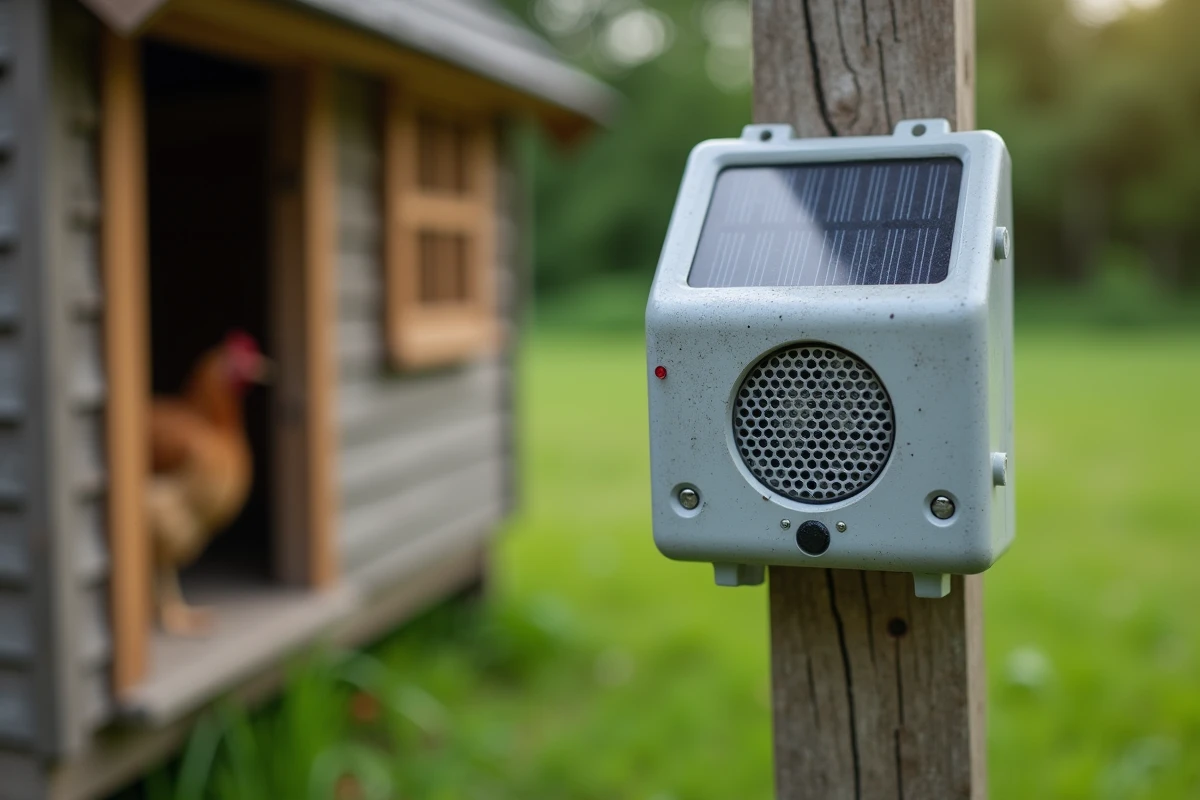
Devices that broadcast distress calls of corvids or raptor calls trigger an immediate flight response. Programmable models allow for varying sequences and broadcast times, which delays habituation.
However, these devices emit noise audible to the neighborhood. In residential areas, their use can be problematic. Ultrasonic scarecrows, on the other hand, are reported to be ineffective outdoors against magpies according to field feedback.
9. Frequent egg collection
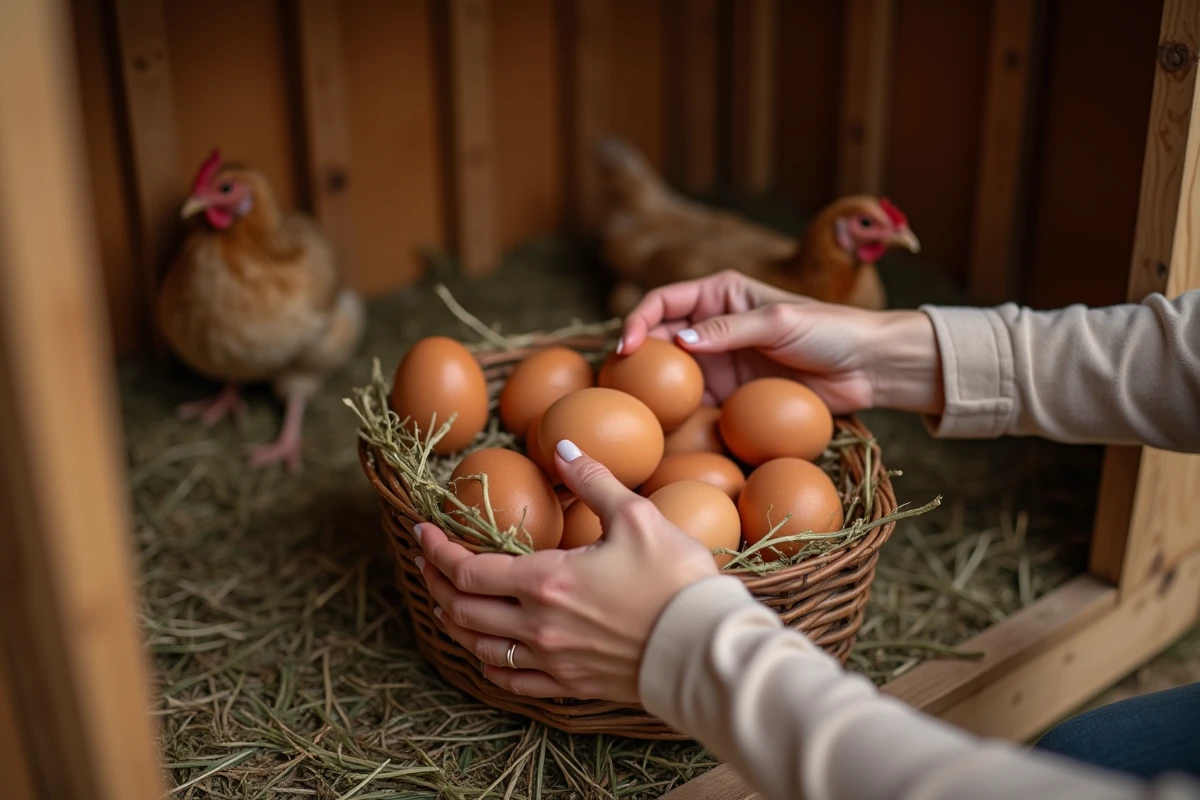
Collecting eggs several times a day reduces the duration they remain exposed. A magpie that finds an empty nesting box three times in a row tends to look for a more reliable source elsewhere.
This habit requires discipline but costs nothing. Combined with the closure of nesting boxes, it creates an environment where the magpie no longer finds a reward, prompting it to leave the area.
10. Removal of perches near the chicken coop
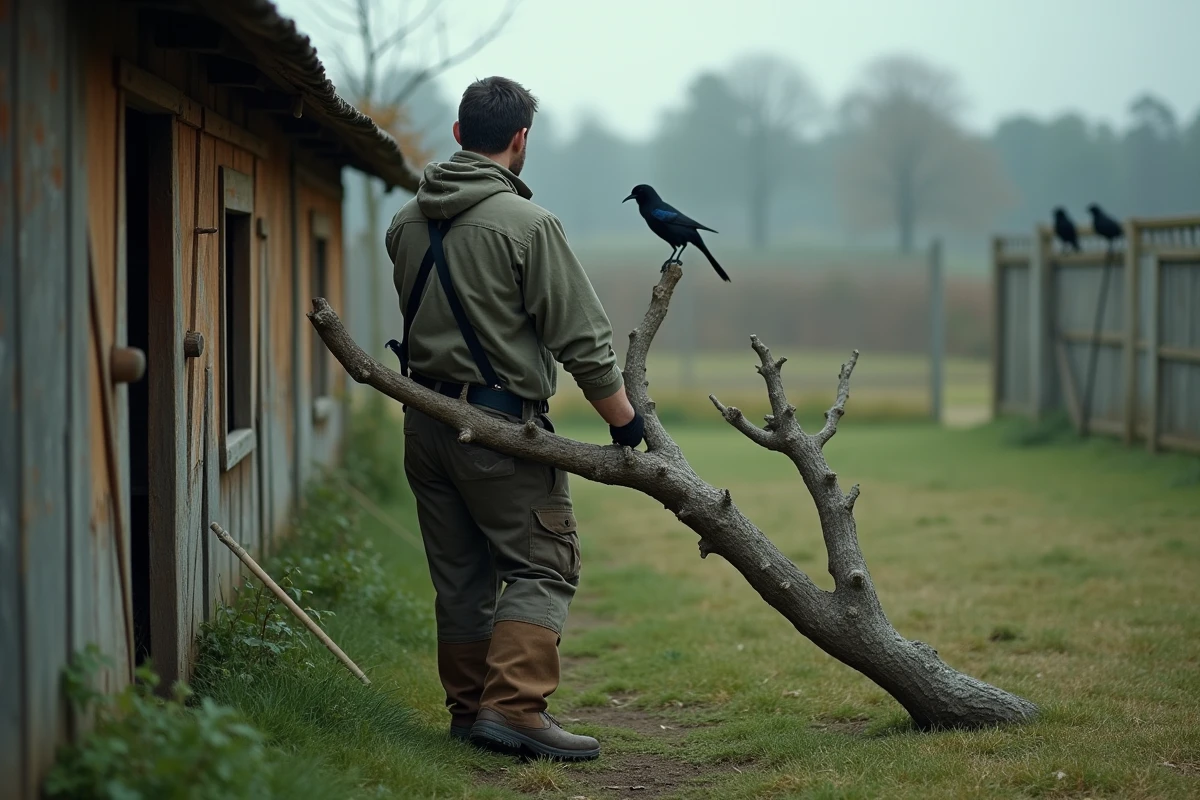
Magpies observe for a long time before acting. They use low branches, fence posts, and adjacent rooftops as observation posts. Trimming branches within several meters around the chicken coop removes these vantage points and complicates their approach.
This environmental measure affects the magpie’s scouting behavior. It does not replace physical protection, but it lengthens the corvid’s hesitation time and increases its exposure to disturbances.
| Method | Type of protection | Durability | Possible habituation |
|---|---|---|---|
| 25 mm anti-corvid mesh | Physical barrier | Permanent | No |
| Enclosed mobile chicken coop | Physical barrier | Permanent | No |
| Closure of nesting boxes | Resource removal | Permanent | No |
| Automatic door | Mechanical barrier | Permanent | No |
| Bird netting | Physical barrier | Permanent | No |
| Airtight grain storage | Resource removal | Permanent | No |
| Raptor kite | Visual deterrence | Temporary | Yes |
| Sound scarecrow | Auditory deterrence | Temporary | Yes (delayed) |
| Frequent egg collection | Resource removal | Permanent | No |
| Removal of perches | Habitat modification | Permanent | No |
Methods involving physical barriers and resource removal maintain their effectiveness indefinitely against magpies. Deterrent devices, whether visual or auditory, lose effectiveness over time in the face of corvid intelligence. The combination of fine mesh netting, an automatic door, and rigorous management of eggs and grain covers the vast majority of situations encountered in amateur breeding.