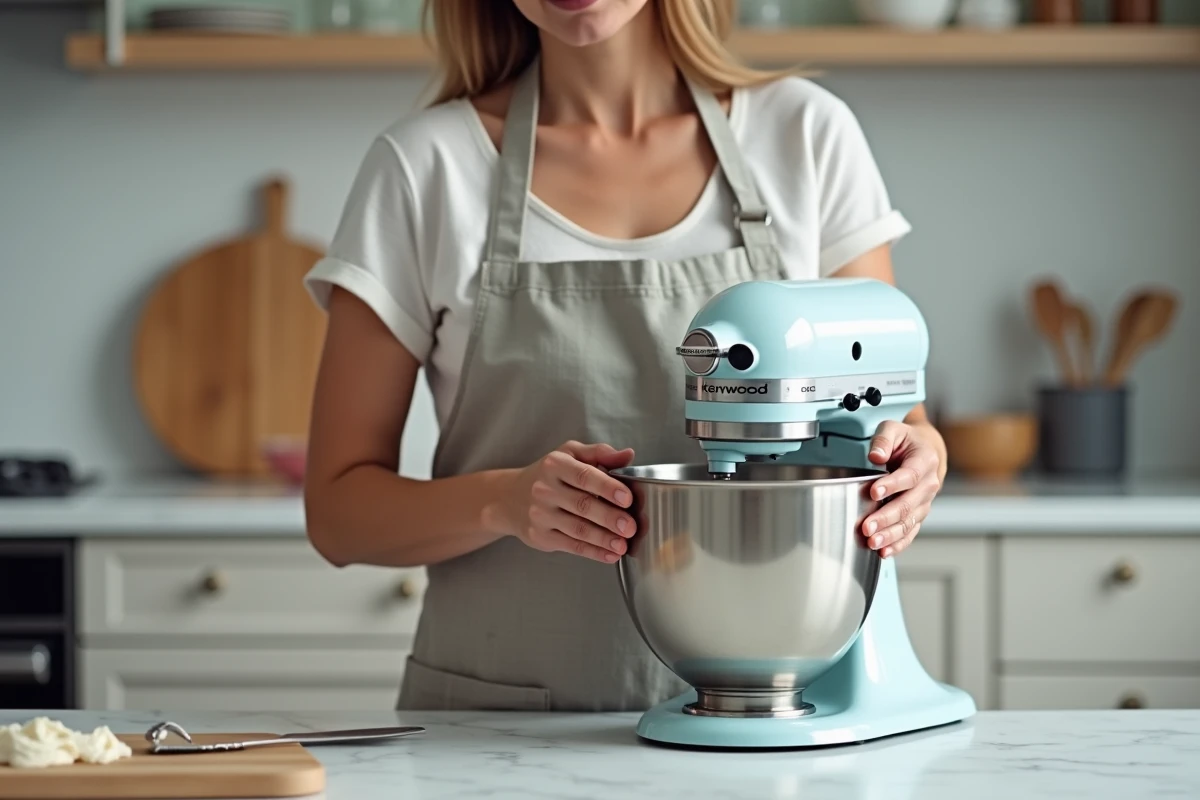
Removing the bowl from a Kenwood mixer may seem trivial, until the day it refuses to budge. The issue affects both recent models from the Titanium Chef range and the kMix or MultiPro series, with causes varying depending on the type of locking mechanism, maintenance history, and washing method used.
Kenwood Safety Lock: The Jam That Is Confused With a Sticking
Kenwood manuals distinguish between two situations that most users confuse: the bowl locked by the safety system and the bowl actually stuck to its base. The difference is crucial, as the maneuver to apply is not the same.
On recent models (notably the Titanium Chef Baker KVC85), a reset of the safety lock must precede any mechanical attempt. Specifically, this involves repositioning the arm or head of the mixer to the high position, sometimes accompanied by pressing a release button before turning the bowl. Forcing the rotation directly without this step risks damaging the locking pin or the base.
If you own a Kenwood mixer and are looking to understand how to remove the bowl from the Kenwood mixer based on your specific model, the safety procedure remains the first reflex to adopt before any physical manipulation.
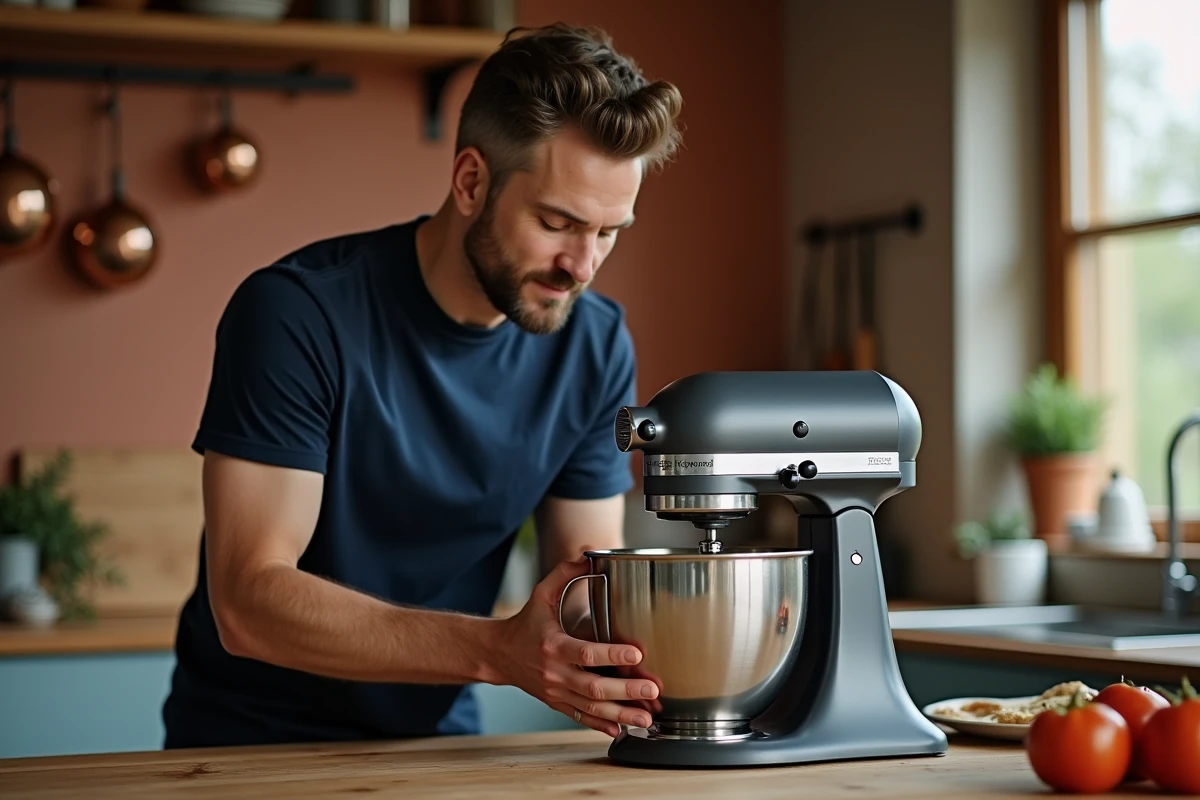
Dishwasher and Kenwood Stainless Steel Bowl: A Documented Cause of Locking
Feedback from participatory repair workshops (Repair Cafés) in France indicates a clear trend: stainless steel bowls with plastic or rubber bases get stuck more often after being washed in the dishwasher. The combination of heat from the wash cycle and aggressive detergents causes micro-deformations on the fitting parts.
The result is a gradual tightening of the locking mechanism, sometimes invisible to the naked eye. The bowl becomes increasingly difficult to turn over successive washes, until it becomes completely stuck.
Identifying a Bowl Deformed by the Dishwasher
Some clues can help identify this type of blockage before it becomes irreversible:
- The bowl requires increasing force to be removed from one use to the next, whereas it was easily detachable at first
- The plastic or rubber base appears slightly warped or has a surface that has become rough to the touch
- The bowl turns in one direction but gets stuck before completing the unlocking motion, as if it is hitting an invisible obstacle
When these signs appear, hand washing remains the only effective prevention. For a bowl already deformed, field reports vary on the possibility of reshaping it without replacing the base.
Food Grease on the Thread: The Little-Known Customer Service Recommendation
Kenwood has circulated internal customer service bulletins since 2022 for certain models, particularly the kMix and MultiPro ranges. The recommendation is clear: apply food-grade grease to the thread or locking pin after a difficult unlocking episode. The goal is to prevent recurrence.
This recommendation is echoed by authorized centers like Darty and Boulanger in their FAQs and customer service forums, but it remains very rarely mentioned in consumer guides. Food-grade grease (such as silicone grease compatible with food contact) lubricates without contaminating preparations, provided it is not applied inside the bowl.
Application Method on a Kenwood Mixer
The action is simple but requires a minimum of rigor. Remove the bowl (or have it removed by a third party if the blockage is total). Clean the thread of the base and the locking pin with a dry cloth. Apply a thin layer of food-grade grease to the friction areas, then replace the bowl while making two or three complete rotations to distribute the lubricant.
Maintenance every three to four months is sufficient for regular use. For a mixer used daily (home baking, fresh pasta), a monthly application significantly reduces the risk of sticking.
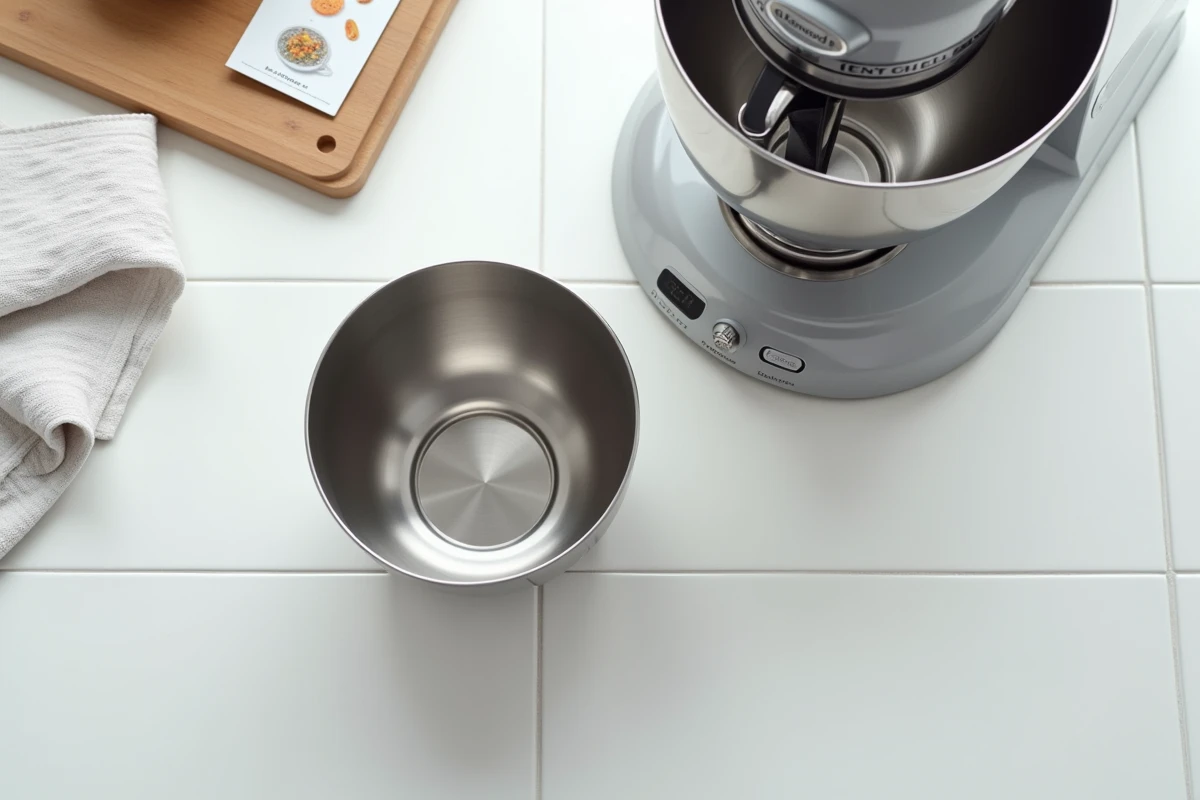
Kenwood Bowl Stuck Despite Everything: Actions to Avoid Breakage
When neither the safety reset nor lubrication works, the temptation is to force it. It is precisely at this stage that most damage occurs, particularly to the motor or the drive system of the base.
Before resorting to a tool, check these points:
- The arm or head of the mixer is raised to the maximum position (on tilting head models, an incorrect angle is enough to maintain the lock)
- No accessory (whisk, hook, beater) is still in place on the shaft, as their weight or position can prevent release
- The mixer is unplugged, placed on a stable and non-slip surface to avoid slipping during manipulation
- The bowl is cold (a bowl still warm after preparation may slightly expand and get stuck further)
If the bowl remains immobile after these checks, a warm, damp cloth applied around the base for a few minutes may help relax the plastic parts without risk to the stainless steel. However, using a screwdriver or pliers to lever is to be avoided: the risk of cracking the base or scratching the thread of the base is real.
When none of these attempts yield results, turning to an authorized Kenwood center remains the safest solution. Forcing a stuck bowl can irreversibly damage the mixer base, and this type of damage is generally not covered by the manufacturer’s warranty if inappropriate handling is identified.
Kenwood models equipped with a direct drive motor are particularly sensitive to the stresses placed on the bowl shaft. On these devices, any excessive twisting is transmitted directly to the internal mechanism, where a belt-driven motor would absorb part of the effort.