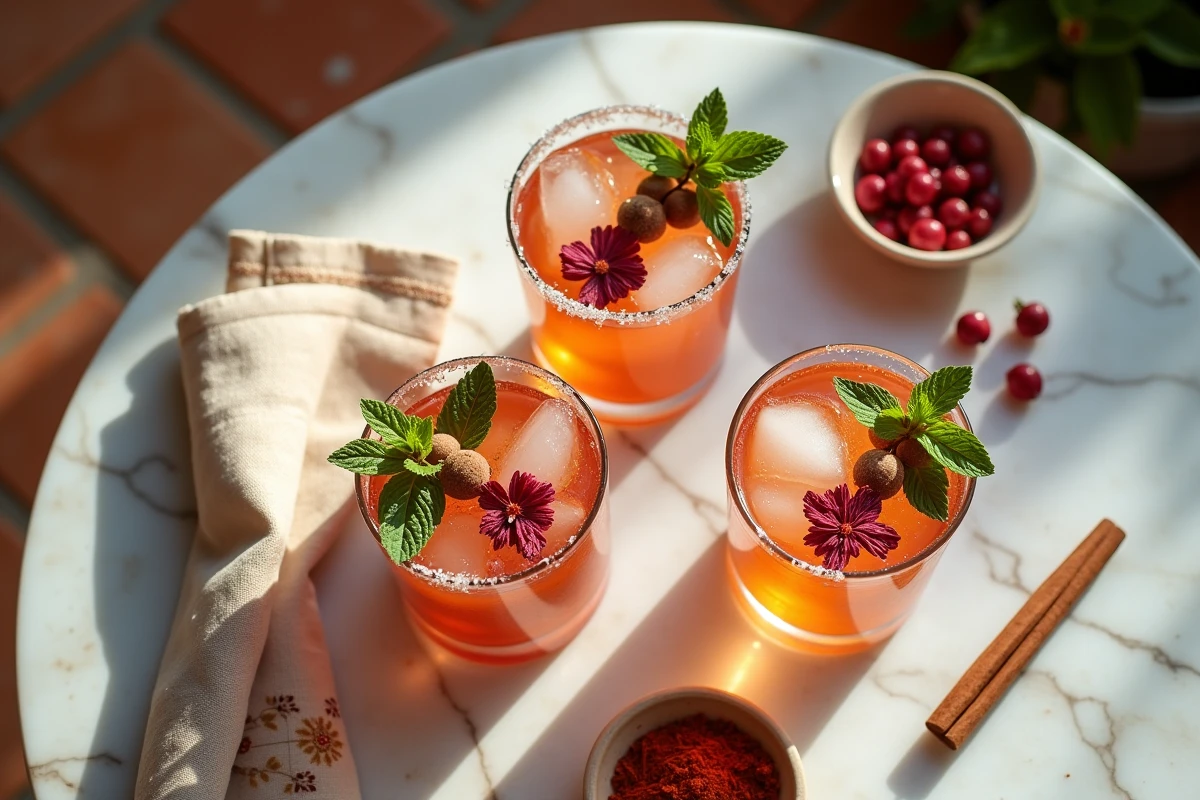
Middle Eastern cocktails rely on a distinct flavor palette that differs from classic Western mixology. Rose water, orange blossom water, sumac, zaatar, pomegranate, dates: these ingredients have structured the region’s drinks, hot or cold, for centuries. Translating them into a cocktail glass for a summer aperitif requires understanding how these flavors work, what they bring to a spirit base, and how to balance them with fresh textures.
Rose Water and Orange Blossom Water: Two Floral Waters with Distinct Roles
A common mistake is to treat rose water and orange blossom water as interchangeable. Their flavor profiles diverge significantly.
Rose water adds a high, almost sweet note that pairs well with red fruits (raspberry, pomegranate) and light spirits like vodka or floral gin. A few drops are enough to flavor without overwhelming the palate. An excess turns the cocktail into perfume.
Orange blossom water, rounder and slightly bitter, pairs with citrus (lemon, grapefruit) and supports stronger bases like white rum or arak. It works particularly well in cocktails where a classic simple syrup would be too flat. Replacing simple syrup with a homemade orange blossom-infused syrup adds a depth that sugar alone does not provide.
Several resources detail recipes for Middle Eastern-inspired cocktails that utilize these two floral waters according to precise measurements, avoiding the pitfall of overdosage.

Spice and Fruit Syrups: Pomegranate, Date, and Sumac in Cocktails
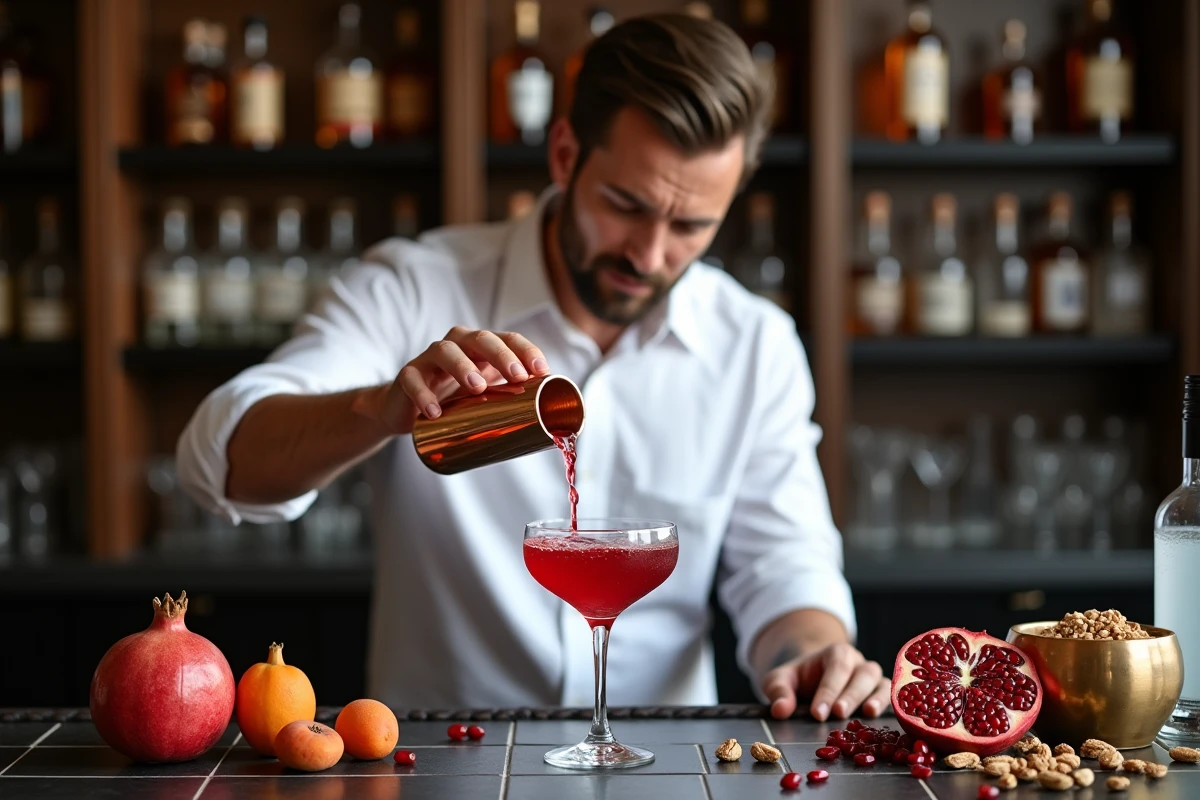
Pomegranate syrup (real syrup, not industrial grenadine) is the most versatile base in this family. Its combination of acidity and natural sweetness effectively replaces cranberry juice in a revamped cosmopolitan or triple sec in an adapted margarita.
Date syrup adds a dense, almost caramelized sweetness that suits cocktails served over crushed ice. Combined with lime and bourbon, it creates a profile similar to a whiskey sour, with added roundness.
Sumac deserves a special mention. This red spice with a lemony and slightly astringent taste does not lend itself well to direct infusion in alcohol (the result is often cloudy and bitter). The technique that works:
- Prepare a sumac oleosaccharum by mixing lemon zest, powdered sumac, and sugar, then let it macerate for several hours until a concentrated syrup is obtained
- Filter finely before use to avoid any suspended particles in the glass
- Use sparingly: sumac enhances perceived acidity, reducing the need for fresh lemon juice
This type of preparation transforms a classic recipe into something distinctly different, without resorting to hard-to-find ingredients.
Arak and Alternatives: Choosing the Right Spirit Base
Arak, an anise-flavored spirit distilled from grapes, is the emblematic spirit of the Levant. When mixed with water, it becomes cloudy (louche effect) and develops a complex flavor profile. In cocktails, it replaces pastis in a drier and less sweet format.
Arak is always diluted before being mixed with other ingredients. Pouring arak directly over ice without water causes the crystallization of anise essential oils, altering the mouthfeel.
For those who do not enjoy anise, two alternatives work well with Middle Eastern flavors:
- Botanical gin, whose notes of juniper and coriander naturally pair with zaatar and citrus
- Neutral vodka, which allows the syrups and floral waters to take center stage without aromatic competition
- Agricultural white rum, whose slight herbal note complements sumac and fresh mint
The Non-Alcoholic Option
The mocktail approach is gaining legitimacy in this niche. Middle Eastern ingredients work just as well without alcohol as with it. A mix of rose water, fresh pomegranate juice, lemon, and sparkling water produces a structured aperitif that does not resemble diluted fruit juice. Adding a pinch of salt and a splash of white balsamic vinegar replaces the burning sensation provided by alcohol.
Aperitif Pairings: What Flavors to Serve Alongside the Glass
A pomegranate and sumac cocktail loses some of its appeal if paired with plain chips. The pairing works when the flavors of the glass and the plate share a common aromatic register.
Hummus, served warm with grilled pita bread and a drizzle of olive oil, remains the most natural companion. Its creamy texture and sesame (tahini) flavor soften the acidity of sumac or lemon-based cocktails. Crispy falafels provide a welcome textural contrast.
For a floral cocktail (rose, orange blossom), a salad of tomatoes and feta with fresh mint creates a more subtle pairing. The saltiness of the feta balances the floral sweetness of the drink.
Grilled merguez or zaatar sprinkled on fresh cheese lean more towards cocktails based on arak or gin, whose aromatic power holds up against the spices.
The current trend, supported by several international hotel groups, confirms that these pairings are no longer niche: the fusion of Middle Eastern cuisine and mixology is firmly establishing itself on aperitif menus, even outside the region of origin. Preparing these cocktails at home ultimately requires just a few well-chosen ingredients and a measured dosage of floral waters.