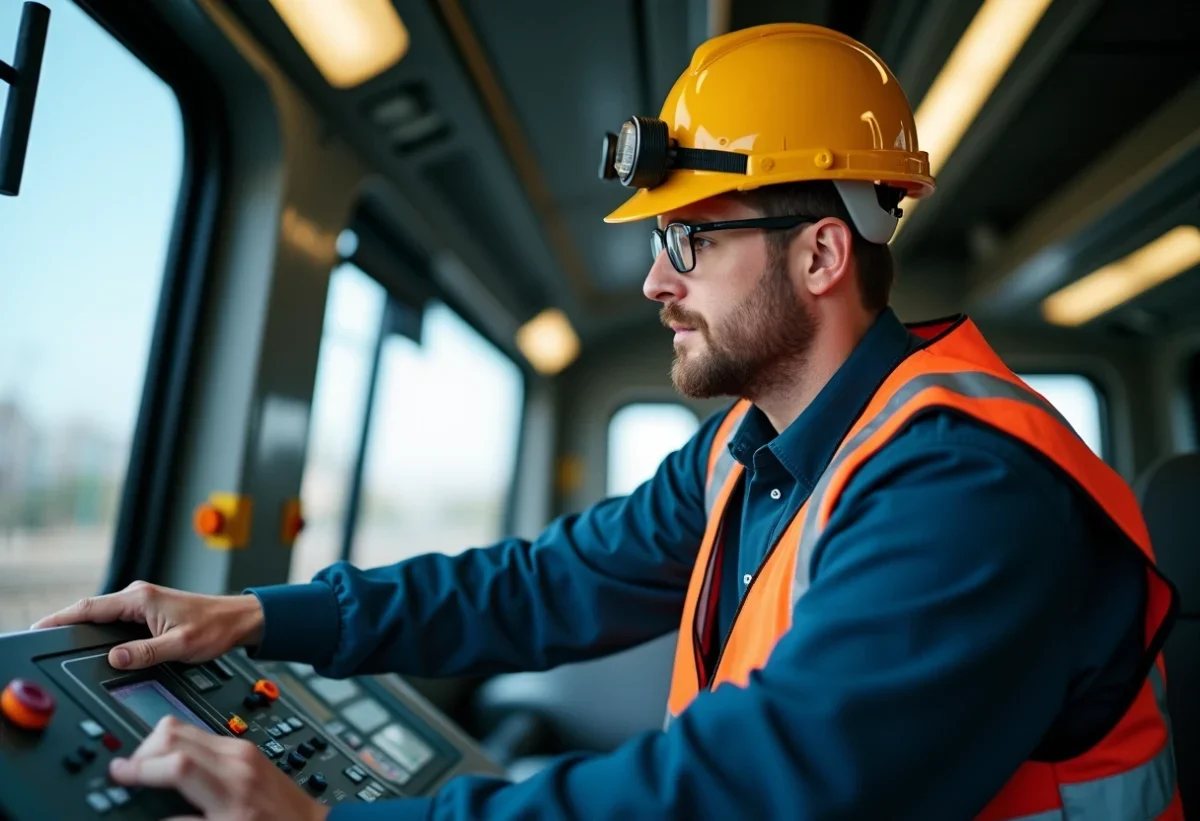
Railways, often associated with train drivers and conductors, actually encompass a multitude of lesser-known and fascinating professions. Behind every train journey are experts with unique skills, ensuring the safety and efficiency of the rail network.
Among these professions, some technicians work in the shadows, maintaining the tracks and electrical systems, while others, like the signalers, precisely orchestrate the daily ballet of trains. Each of these roles, though discreet, is essential to the smooth operation of this gigantic machinery.
Little-known but essential professions
In the world of railways, some jobs are less visible but just as significant. Train drivers are the iconic figures of the sector, but an army of professionals ensures the efficiency and safety of journeys.
- Network maintenance technicians: they ensure the good condition of the infrastructure, from the tracks to the overhead wires.
- Rail signalers: masters of traffic regulation, they are essential to prevent collisions and smooth the flow of trains.
- Wagonist: this often-overlooked profession involves the management and maintenance of freight cars, ensuring their good condition for transporting goods and passengers.
The role of planners and engineers
Planners orchestrate the entire rail traffic. Their work is of surgical precision; every minute counts to avoid delays and optimize routes. Engineers design and improve infrastructures, integrating technological advances to modernize the network.
Security providers and railway safety agents
Safety is a priority. Security providers oversee the surveillance of facilities, while railway safety agents protect travelers and staff. Their presence deters malicious acts and ensures a serene environment for all.
Ground operation managers coordinate activities on the ground, ensuring the smooth execution of daily operations. Their role is essential to ensure the fluidity and safety of the rail network. 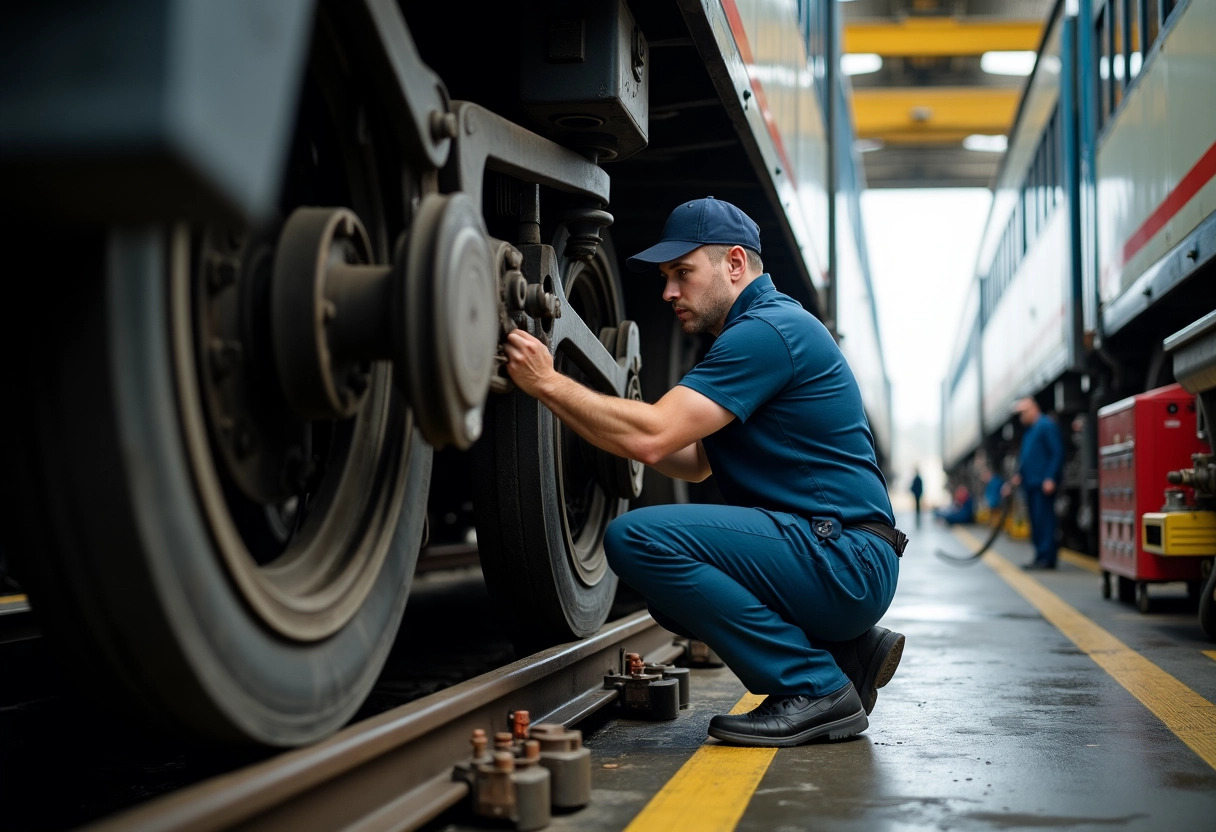
The challenges and opportunities of atypical railway professions
A constantly evolving sector
The railway sector employs 150,000 people in France. These atypical jobs offer varied opportunities, ranging from CAP to specialized master’s degrees. This diversity of training allows for the integration of different profiles and meets the growing needs for specific skills.
Training and partnerships
The partnership with Futur en Train and organizations like Login ensures continuous training for professionals. At the Lausanne-Triage station, operated by CFF Cargo, initiatives are in place to train future logisticians, like Romain Piolino, a logistician at CFF.
Adaptation to new technologies
The railway sector, which operates 15,000 trains daily, must constantly adapt to new technologies. Engineers play a key role in this modernization. The challenges are numerous: decarbonization, increased traffic, and digitalization of processes.
Sustainable development and innovation
Environmental issues are pushing the sector to rethink its practices. Network maintenance technicians are on the front lines to integrate these innovations. Security providers and railway safety agents must also adapt to meet new standards and ensure quality service.
These challenges represent opportunities for atypical railway professions. Professionals must continuously train, adapt, and innovate to meet the demands of a constantly evolving sector.